SHAMILA BESLOW
TURNING PAIN INTO PURPOSE THROUGH FILM, FAITH, AND FEARLESS STORYTELLING
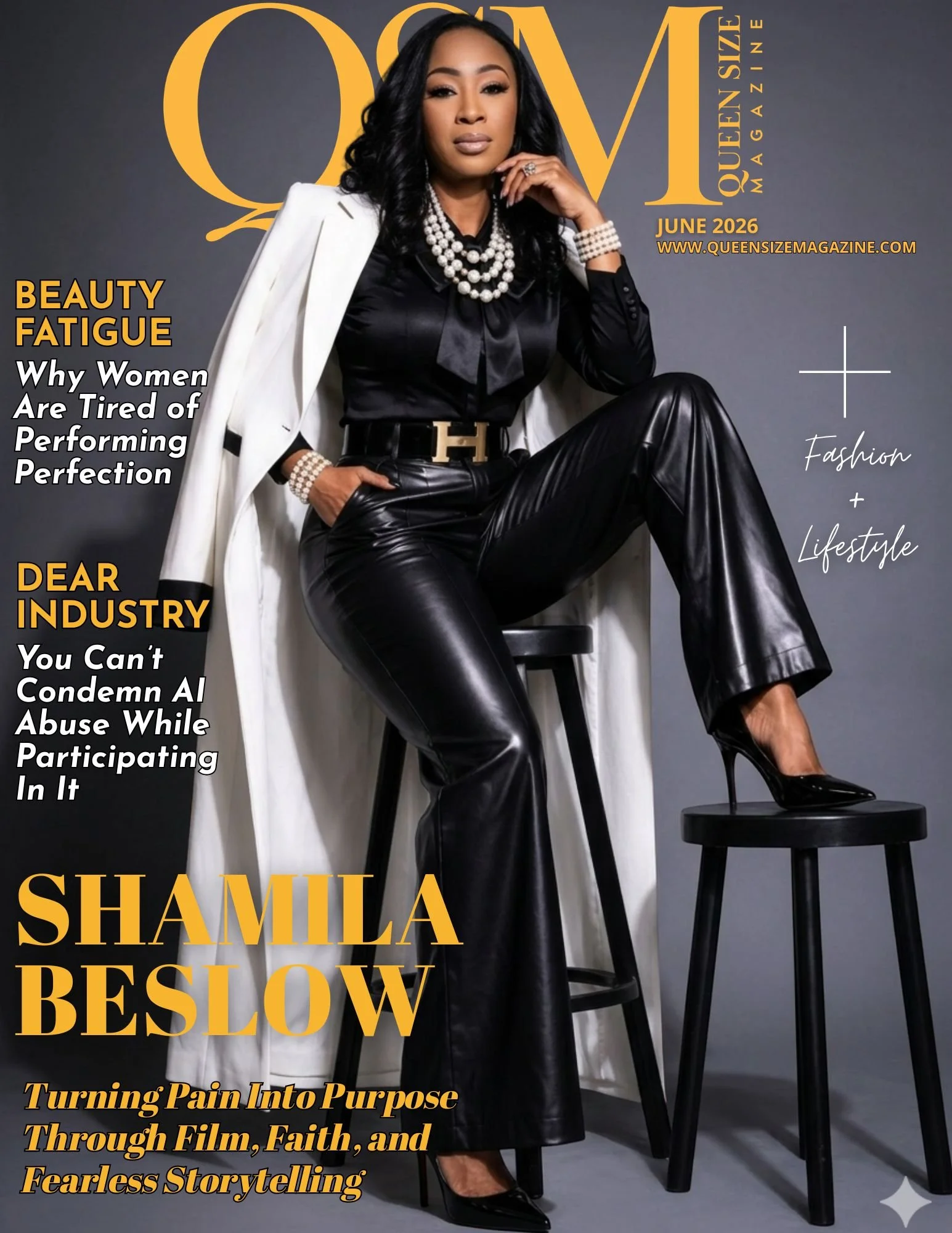
There are some women who simply wear many hats, and then there are women like Shamila Beslow, who build entire platforms while carrying the weight of life’s hardest battles on their shoulders. Entrepreneur. Filmmaker. Actress. Producer. Director. Writer. Advocate. Wife. Mother. Survivor. Shamila’s story is not one built on perfection. It is built on perseverance, faith, and an unwavering refusal to allow pain to define her future.
As the Founder and CEO of Resilient Enterprises and Resilient Films, Shamila has created a lane for herself that merges creativity with healing. Her work doesn’t shy away from uncomfortable conversations. Instead, she leans directly into them, using storytelling as a vehicle to address trauma, mental health, women’s empowerment, chronic illness, blended family dynamics, faith, and survival. Every project attached to her name carries intention. Every script carries truth. And every production reflects a woman who understands firsthand what it means to rebuild your life while still carrying invisible scars.
With over 28 years in the entertainment industry, Shamila’s resume spans film, television, casting, production, and media. Audiences may recognize her work from projects including The Perfect Christmas, Swagger, 10 Minutes Ago, St. Louis Blues, D.J. The Greatest Superhero, Trapped In The Game, and House Hunters. But while many creatives chase visibility, Shamila’s focus has remained rooted in impact. She is not interested in creating stories simply for entertainment. She wants audiences to feel seen. Heard. Understood. Challenged. Healed.
That mission continues with her upcoming feature film, When Fatal Attraction Hits Home, scheduled for release in October 2026. The psychological drama, inspired by true-life themes and emotional realities many people quietly endure, is already generating attention for its raw and unapologetic storytelling. Shamila serves as the Writer, Producer, Director, and Executive Producer on the project, further solidifying her reputation as a powerhouse creative who refuses to water down difficult conversations for comfort. Instead, she brings audiences face-to-face with the emotional complexities that often remain hidden behind closed doors.
What makes Shamila’s story even more compelling is that entertainment is only one side of her professional journey. Beyond the cameras and production sets, she has built an impressive corporate career with extensive experience in IT operations, project management, business development, and government consulting. Armed with a master’s degree and PMP certification, Shamila has mastered the delicate balance of corporate leadership and creative entrepreneurship. Through Beslow & Associates LLC, she also provides consulting, tax preparation, notary, and business support services, proving that her ambition has never been confined to a single industry.
Still, titles and accolades only tell part of the story.
At the heart of Shamila’s journey is survival.

After experiencing paralysis and continuing to battle both Lupus and Guillain-Barré Syndrome, Shamila understands what it means to fight for your life while simultaneously trying to hold onto your identity. Chronic illness has a way of changing everything — physically, emotionally, mentally, and spiritually. But rather than retreat into silence, she chose advocacy. She chose visibility. She chose honesty.
Through speaking engagements, podcasts, schools, community events, women’s empowerment initiatives, and faith-based platforms, Shamila openly shares her testimony to encourage others navigating their own battles. She speaks for people living with invisible illnesses. For women trying to rediscover themselves after trauma. For survivors who are still learning how to trust their own strength again. And perhaps most importantly, she reminds people that purpose does not disappear simply because life becomes difficult.
Her authenticity is what makes her resonate far beyond entertainment. In an era where branding often feels manufactured and vulnerability is carefully curated for social media, Shamila presents something much rarer: honesty. The elegance she carries is not performative. The strength she projects was earned. And the resilience attached to her name is not just a slogan — it is lived experience.
A former Mrs. East Coast Globe 2022 titleholder, Shamila embodies grace and leadership while remaining deeply grounded in service and community impact. Whether she is directing a film set, mentoring women, advocating for chronic illness awareness, or building businesses, her work consistently centers around one thing: helping others believe that their story still matters, even after hardship.
Her personal brand tagline, “Real Stories. Raw Truth. Relentless Drive.” is more than a catchy phrase. It is the blueprint for the legacy she is building.
And that legacy is only continuing to grow.
As Shamila Beslow expands her reach through film, entrepreneurship, advocacy, and public speaking, she is creating more than projects and businesses. She is creating space. Space for healing. Space for difficult conversations. Space for women to reclaim their voices. Space for stories that mainstream platforms often overlook.
In a world that frequently celebrates polished outcomes while ignoring painful journeys, Shamila Beslow stands as a reminder that resilience is not about pretending everything is okay. It is about continuing forward anyway.


QSM: Your story is rooted in resilience, but resilience often comes with pain first. Was there a specific moment in your life when you realized your struggles were becoming part of your purpose?
Shamila:To be completely honest, think about your life abruptly stopping. This is exactly what happened to me. I went from being a woman constantly moving, building, raising children, volunteering in my community, coaching children, working, dreaming, and helping everyone else, then boom, I’m paralyzed. I could not walk independently. I could not function the way I once did. And mentally, that was one of the darkest periods of my life.
People talk about physical pain all the time, but they do not talk enough about the emotional and mental devastation that comes with losing control of your own body. I had to wear diapers and spent over a year in the hospital. I gained over 100 pounds. I had to learn how to walk all over again. I battled depression, fear, anxiety, isolation, and moments where I honestly questioned who I even was anymore. However, even in the hospital, I had to find some peace. I had to somehow keep the spirit of who I was. I would put on my makeup, get in my wheelchair, and move around the hospital visiting the other patients.
At the same time, life around me never stopped demanding things from me. I was still a mother. Still a wife. Still showing up for children in my community as a volunteer cheer coach because those kids needed someone who believed in them. Even during my own struggles, I wanted to be a safe place and a positive example for young girls who may also be dealing with things silently.
But behind the scenes, life was heavy. For years, there have been ongoing court battles, conflict with my husband’s ex, tension with her family, and at one point even division within his own family. That kind of stress takes a toll mentally, emotionally, physically, and spiritually. It is exhausting constantly feeling like you have to defend your character, your peace, your home, and your intentions while still trying to heal yourself. When I am one of the most peaceful and loving people you will ever meet.
People see all my accomplishments, but they do not always see the emotional weight behind them. They do not see the nights I have cried quietly, the anxiety, the pressure of trying to hold a blended family together, or the feeling of being pushed out on your own while still expected to carry everything gracefully.
One of the biggest transitions in my life was helping raise a daughter who was not biologically mine and loving her as my own, while also navigating all the complications, emotions, and judgment that can come with blended families. Then as my own children became adults, I found myself trying to rediscover who I was outside of motherhood, survival, and responsibility. Starting over emotionally later in life is something people do not talk about enough.
But through all of that pain, I realized something powerful: my struggles were not destroying me, they were revealing me. God showed me that my survival was connected to purpose. My story was never meant to stay hidden. Every battle taught me resilience. Every setback taught me compassion. Every attack taught me endurance.
That realization is what pushed me deeper into filmmaking and storytelling. When Fatal Attraction Hits Home is only one part of that journey. There is so much more to tell, as I am still dealing with the issues still today. Today, I also help other independent filmmakers tell their true-life stories, especially stories rooted in trauma, survival, healing, and overcoming adversity. I know how difficult it can be to share painful truths publicly, but I also know how healing and powerful storytelling can be when done honestly.
For me, filmmaking is bigger than entertainment. It is about giving people a voice, helping others feel seen, and creating space for real conversations that society often avoids. Because sometimes the stories people are afraid to tell are the exact stories someone else desperately needs to hear. I am hoping that this film and all the others will help at least one person. That may be someone who may know someone who needs it. That it will start conversations that people are afraid of having.
QSM: You wear so many hats: filmmaker, entrepreneur, advocate, wife, mother, producer, and more. How do you balance being everything to everyone while still protecting your own mental and emotional well-being?
Shamila: LOL I really don’t know how I do it. It’s my superpower. Lol! No but truly people see all the titles: filmmaker, entrepreneur, advocate, producer, wife, mother, but behind all of that is still a woman trying to heal, grow, and hold herself together. I attend therapy twice a week or more if needed. Mental wellness is something I take seriously because I have experienced what it feels like to completely lose yourself while trying to be everything for everyone else.
One of the biggest transitions in my life was starting over emotionally and mentally at a stage where most people think life should already be “figured out.” My children were grown, and I found myself helping raise a daughter that was not biologically mine, A toddler at that. All my children are out of the house, and it was time for me to start living my life. However, loving her as my own, while still trying to rediscover who I was outside of motherhood, survival, and responsibility. That was extremely hard at first. Do I want to do it in the beginning? Hell no. lol. However, when I say this little girl who needed guidance and love. My heart would not let me move on. I didn’t know how much of that would come with major sacrifices, emotional adjustments, and moments where I was going to feel unseen. Times when I would be under attack.
People do not realize how mentally exhausting it can be to pour into others while carrying your own trauma, health battles, disappointments, and fears silently. I had to learn that protecting my peace is not selfish. Therapy, prayer, boundaries, rest, and honesty with myself became necessary. Sometimes strength looks like pushing forward, and sometimes strength looks like admitting you are tired.
QSM: Your upcoming film When Fatal Attraction Hits Home is already creating buzz because of its raw emotional themes. What inspired this story, and what conversations are you hoping the film sparks once audiences see it?
Shamila: To be honest, when I first started this film. It was a vlog, then it went to a podcast, then it went to a book. Then a film. I had been working on it since 2023. I had only one thing on my mind at the time. At first, believe it or not, it was to be a self-help book for men who were going through this. So many men stop having relationships with their child because they don’t want to deal with the so-called baby momma drama. However, me being of a legal background and work in family law.
I knew it was much more than that. However, now I get to see it from both sides.
When Fatal Attraction Hits Home comes from a very real place emotionally. It is inspired by the layers of trauma, toxic relationships, emotional damage, betrayal, mental instability, and unresolved pain that people often hide behind closed doors. So many people are silently suffering while pretending everything is okay. They are not being honest with themselves or the people around them. They are also bringing a child into this mess, and that’s just not okay.
I wanted to create a story that felt raw and uncomfortable because life is not always polished. Mental illness, manipulation, obsession, abandonment, trauma bonding, and emotional abuse affect the child in the end. These are real things happening every single day, and many times, people do not recognize the warning signs until it is too late. They also may not even know that they are the ones who are committing the Trauma.
I hope this film sparks honest conversations about healing, accountability, mental health, relationship trauma, and how unresolved pain can destroy lives if left unchecked. More importantly, I want people to understand that hurt people often hurt people, and healing is necessary before the cycles continue. People need to stop passing this stuff on to their children. We need to normalize people being able to move on. While everyone still loves the children and helps them be better than us.


QSM: A lot of your work focuses on trauma, healing, and overcoming adversity. Why do you think it’s important for filmmakers to tell stories that feel uncomfortable but honest?
Shamila: I have a book Collab out called The Woman In the Mirror. My story is called “The Silent Fighter”. In my story, I talk about my childhood and growing up with a mother who was addicted to drugs. How that affected me as the oldest child. I also go into some other things, such as being molested at a young age. Along with some other traumatizing things. I think not only as filmmakers, but we also have a responsibility to tell the truth, even when it makes people uncomfortable. I think that as a people we are so used to pushing things under the rug. I want to be one of those who are part of breaking that cycle. Did I have to deal with flack due to my book? Yes. Will I deal with some from this movie? Yes. One thing about it, people hate what the truth is revealed about them. However, this is my story to tell from my eyes and my trauma. Due to that, I am not afraid to tell the things that happen to me. Some of the most important stories are the ones people try hardest to avoid because they force us to confront reality. Trauma is uncomfortable. Mental illness is uncomfortable. Abuse is uncomfortable. But pretending these things do not exist does not make them disappear. They also don’t allow healing, and no one will learn to do better by ignoring them. People also need to be held accountable and be able to seek help.
For me, storytelling is not just entertainment; it is healing, awareness, and sometimes even survival. I know what it feels like to suffer silently. I know what it feels like to smile publicly while breaking privately. Honest stories give people permission to feel, to reflect, and sometimes to finally seek help. It says to someone that if she can do it, then so can I.
QSM: You’ve openly shared your journey with Lupus and Guillain-Barré Syndrome. How have those experiences changed the way you see yourself, your purpose, and the legacy you want to leave behind?
Shamila: Living with Lupus and surviving Guillain-Barré Syndrome completely changed how I see life. Becoming paralyzed humbled me in ways I cannot even fully explain. It forced me to slow down and reevaluate everything my relationships, my purpose, my faith, and even my own self-worth. I had to understand that I was not taking care of myself. I was not doing what made me happy. It was a blessing and a curse all in one. It allowed people to take care of me for once. It also allowed me to see who was really there for me and who was not.
It also made me realize how deeply connected physical illness and mental health really are. When your body is fighting, your mind often is too. There were moments when I felt hopeless. I had asked God why he wouldn’t just kill me. Moments where I wondered if I would ever fully recover mentally, emotionally, or physically. Then one day a woman that didn’t even know me came into my hospital room. This is what she said to me. “Don’t give up start writing everything down. Go back to the beginning”. I did not have a clue what that woman was talking about. I think maybe she was an angel or something lol. I am not overly religious; however, I do believe in God.
So, surviving those moments gave me a different kind of strength. I told God if you get me out of here and better, I will do everything that I ever wanted to do. Now, my legacy is not just about success or fame. I want people to remember that I was honest. That I used my pain to help others. That I kept going even when life knocked me down repeatedly. I want my children, my family, and women everywhere to know that resilience is not about never breaking it is about rebuilding yourself after you do. While lying in that hospital bed, I earned another degree. I did a few other things. I didn’t allow that to stop me.

QSM: After more than 28 years in entertainment, what do you think independent filmmakers, especially women and women of color, are still fighting to be recognized for in this industry?
Shamila: I think independent filmmakers, especially us women and women of color, are still fighting to be fully respected as leaders, visionaries, and decision-makers; It's sad, but we are. When you look at some of the most amazing movies and TV shows, they all have some of us behind them. However, I don’t think we are brought to the forefront enough. I think at this stage we are getting tired of being in the background. We are often expected to work twice as hard for half the recognition. People underestimate us constantly, especially when we are emotionally transparent or when our stories are deeply personal.
Many women in this industry are also carrying invisible battles behind the scenes, trauma, mental health struggles, chronic illness, motherhood, and financial pressure while still showing up professionally every day. We are not just fighting for opportunities; we are fighting to be seen as worthy of taking up space unapologetically. I was not waiting for someone to give me a seat at the table. I brought my own seat and pushed my way into the table. I said move over or get sat on. I will keep pushing to get us into more of the mainstream. It's our time!!!
QSM: Your tagline is “Real Stories. Raw Truth. Relentless Drive.” Which of those three words best describes the woman you are today, and why?
Shamila: I would say that today, the word that describes me best is Relentless Drive. But look, tomorrow or next week, that might change. Lol Not because life has been easy, but because it has not. I have overcome what would have broken most people. Mom on drugs, abused, molested, pregnant at a young age. I have been paralyzed. I am still battling chronic illnesses. I have faced and am still facing emotional pain, disappointments, setbacks, and moments where I felt completely drained mentally. I have had to rebuild myself more than once.
But no matter how many times life tried to break me, I kept getting back up. That relentlessness comes from my faith, my purpose, my children, and the understanding that my story is bigger than my pain. This is not for me; it’s for others and the ones that come after them and so on. It's about showing people that nothing can stop you if you have the drive.
QSM: So many women reading this interview may be battling illness, trauma, disappointment, or fear behind closed doors. What would you say to the woman who feels like life has completely interrupted her dreams?
Shamila: SIS, who is life? Who is going to check you boo? Nobody! That’s who! Life is what you make it, and life does not tell you what you’re going to do or who you are or what you are capable of. You my sister are the captain of your own ship. You never let anyone take control of your sails from you. You can move those sails and direct your own path. Or you can throw that anchor and take a break. Lie on the deck of your ship and just enjoy the open water waves and the sun on your skin. I want her to know this: life can interrupt your dream. Your dreams begin and end with how far you are willing to take them. Will things happen, and will we get curveballs thrown? Yes of course. You just duck and maneuver and keep on going. If the ball happens to hit you, put a band-aid on it, ice that thing, heal, and get back to it. You may need to heal from some things, learn some things, or even see something before you become who you were meant to be.
I know what it feels like to start over. I know what it feels like to feel forgotten, exhausted, mentally overwhelmed, physically weak, and emotionally lost. I know what it feels like to question whether you still have time to become who you were called to be.
But your story is still being written. Your pain does not disqualify you. Your illness does not disqualify you. Your age does not disqualify you. I had never known a 40+ year old woman to enter her very 1st pageant until I did it. Starting over does not disqualify you. Sometimes the strongest women are the ones rebuilding their lives quietly while still showing up for everyone else. That’s because God knew not to give the job to the weak; they would not be able to handle it. Sis if nobody has told you lately, you are still worthy of joy, purpose, love, and new beginnings. You are a STAR!!! I believe in you, and I love you!! Keep going, Keep pushing.