LEARNING TO BE SEEN IN A WORLD THAT TOLD HER TO HIDE
THE STORY OF SHEERON ALIA
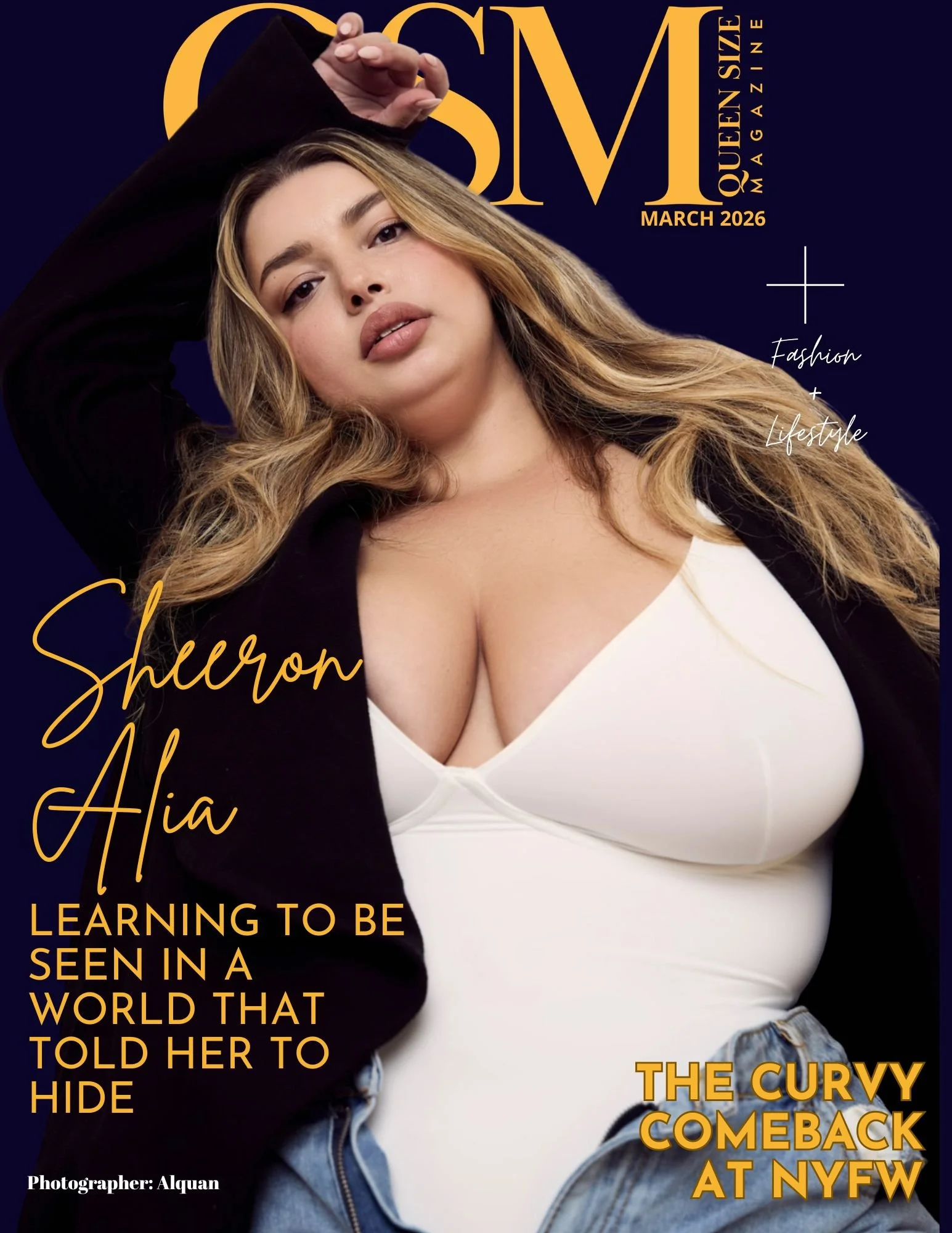
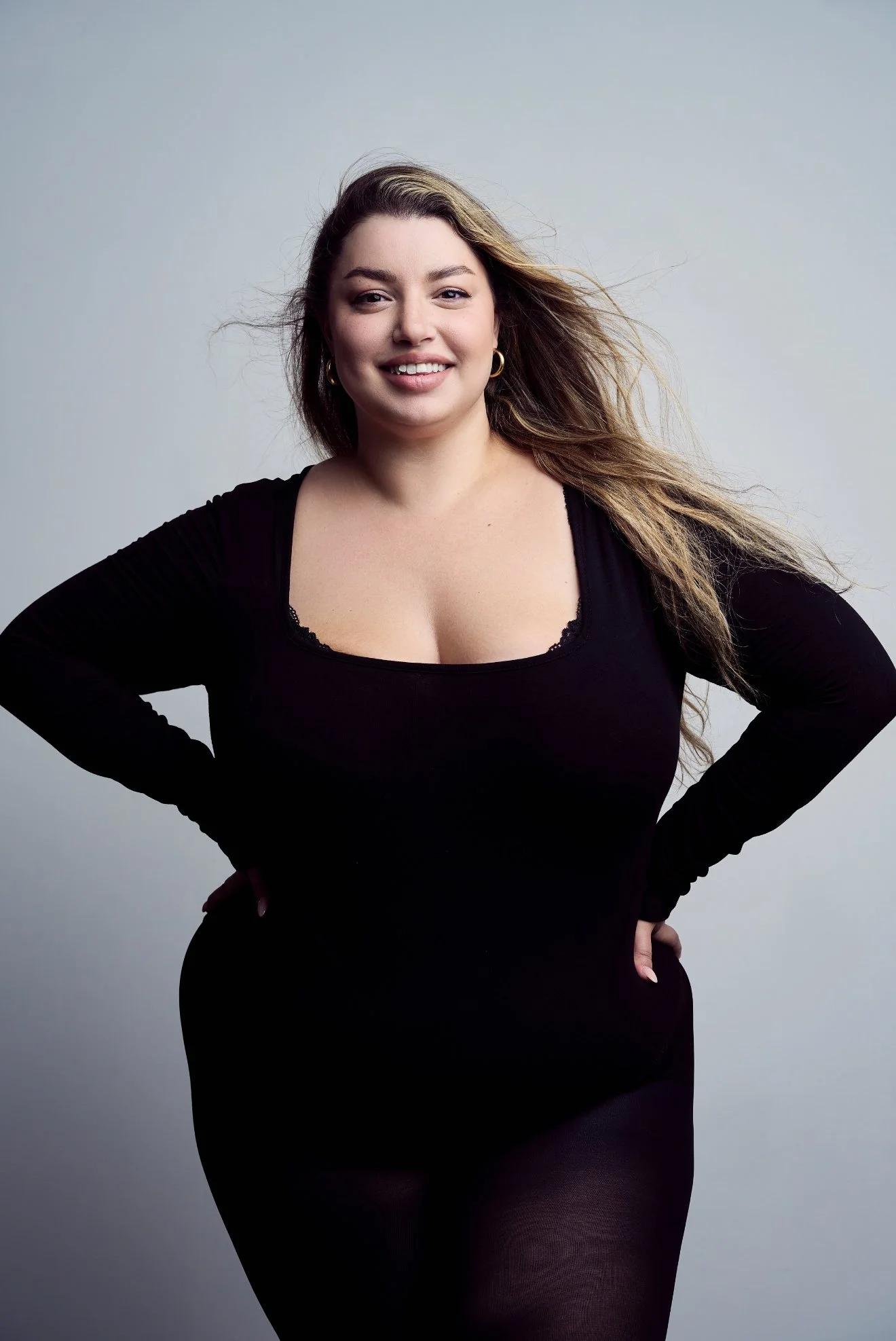
Sheeron Alia’s story is not the typical “I woke up confident one day” narrative. It is layered, emotional, and painfully familiar to anyone who has ever grown up being told their body needed to be managed, minimized, or hidden.
Long before modeling was even a serious thought, Sheeron was already being defined by her size. As a teenager, she wore what most people would consider average sizes, yet where she grew up, being a size M/L was enough to earn the label “fat.” The messaging did not come only from strangers. Much of it came from family, often framed as protection, guidance, or “good intentions.” She was told to cover herself, to avoid showing her arms, and to wear looser clothing to conceal her body.
Though framed as care, those messages subtly reinforced the idea that visibility required adjustment.
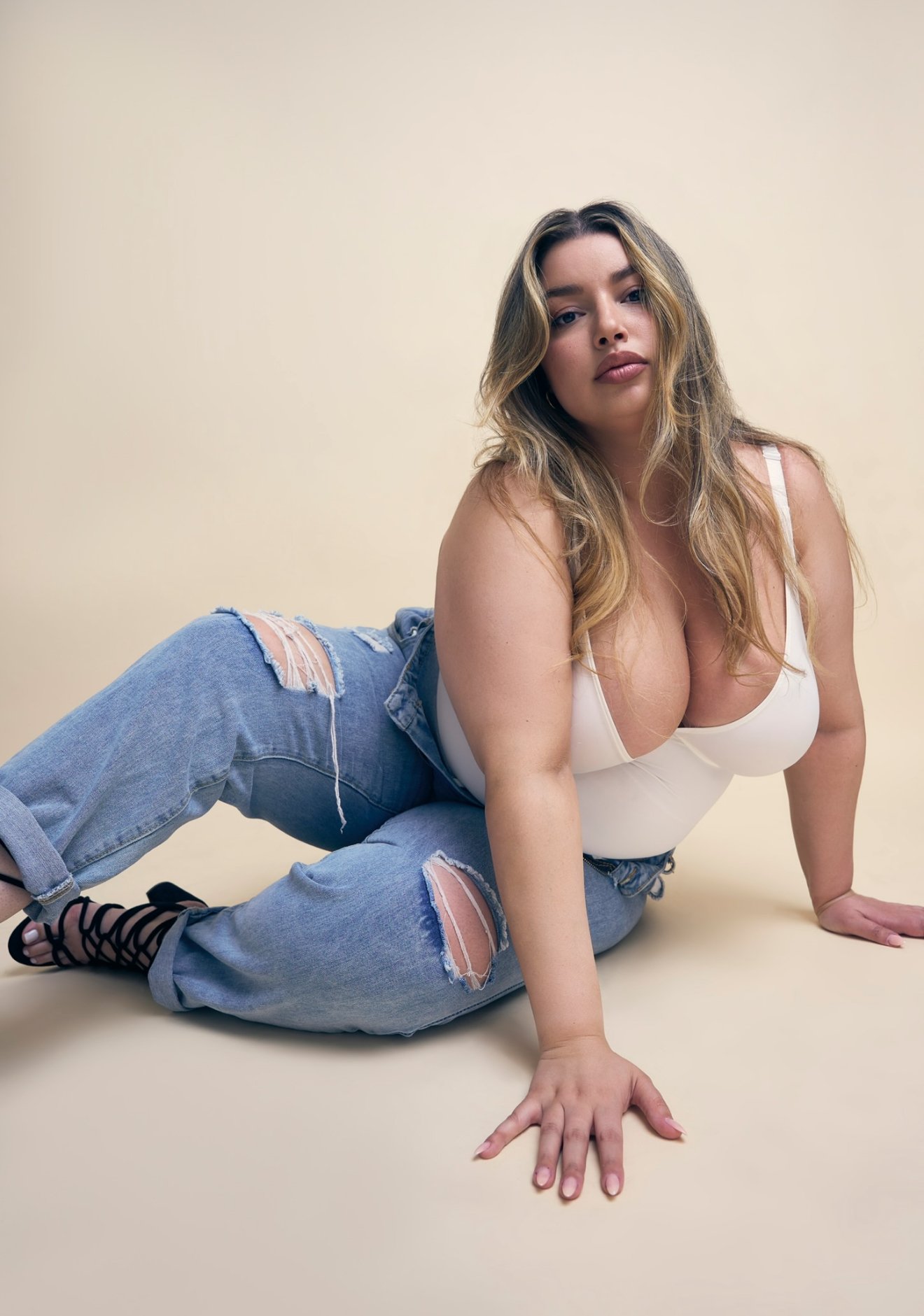
Eventually, Sheeron made a decision that would challenge that narrative. She pursued agency representation, not because the industry felt welcoming, but because she wanted to prove that beauty and presence were not reserved for one body type. That choice became a defining moment, not only personally but within her own family dynamic. Today, the same mother who once worried about exposure proudly displays her daughter’s magazine features inside her boutique, sharing her accomplishments rather than urging restraint.
But her experiences with feeling “different” began long before adolescence.
As a child, she recalls being singled out for physical features that set her apart particularly her fuller lips and her unusually early development. Wearing a bra at eight or nine years old placed her under scrutiny from peers, often making her the target of inappropriate commentary and teasing. Attempts to enter the modeling world at that age only intensified her insecurities. After submitting her details to an agency, she was told she was “too big,” forcing her mother into the painful position of explaining why her dream could not move forward.
Compounding that sense of otherness was her rapid physical growth. By the age of nine or ten, she had reached 5’5”, prompting medical consultations to determine whether anything was wrong. Doctors offered reassurance there was no issue, yet being repeatedly described as simply “big” did little to soften the psychological impact of constantly standing out.
Growing up in a culture where thinness was heavily idealized made those differences even more pronounced. Sheeron describes an environment where fitness and slimness were treated not just as preferences but as markers of discipline and value. Bodies outside those ideals were often met with judgment, leaving her to quietly wrestle with feelings of inadequacy.
Dance, however, became her refuge.
Beginning at the age of five, she found freedom and affirmation through movement. Within the studio, her body was not framed as something to hide but as a source of strength and expression. She recalls moments of quiet kindness from mentors, including a dance school manager who discreetly adjusted costumes to ensure proper fit without drawing attention. Those gestures preserved her confidence during formative years where humiliation could easily have taken root.
Far from being sidelined, she excelled. She earned solos, trained with older dancers, and discovered that her physical presence often enhanced rather than limited her performance opportunities.
Outside the studio, Sheeron gradually encountered spaces where her body was met with a different kind of reception. Social and nightlife environments, where she primarily went to dance, introduced her to something she had rarely experienced: admiration without critique. Her energy, not her size, became the focal point.
Still, earlier conditioning lingered. Oversized layers often accompanied outfits she loved, reflecting residual fears about judgment rather than personal preference.
Relocating to the United States brought an unexpected sense of relief. Surrounded by a broader spectrum of body types, she recalls the emotional shift of feeling, for once, unremarkable in the best possible way. Industry attention followed when her dance instructor shared her social media presence with an agency. Signing felt validating, yet progress proved slow, and after two years, she was released.
The setback was deeply destabilizing.
Like many models facing delayed momentum, Sheeron began questioning her own viability and worth. Over time, she stepped away from the pursuit entirely, placing the dream aside in favor of building stability elsewhere.
What reignited her belief was not an industry breakthrough but representation and timing. Being selected to work with Queen Size Magazine, particularly so soon after giving birth altered her internal narrative. At a moment when many women feel heightened vulnerability about their bodies, she was met with visibility rather than invisibility. The experience restored a sense of possibility that had long felt out of reach.
Her journey, however, has not been free from the industry’s harsher realities. Sheeron recounts moments of overt bias, including receiving an unprofessional response, “Free Palestine”, after submitting to an agency, a reminder that discrimination remains an uncomfortable undercurrent within fashion and media spaces.
Yet one of the most profound moments in her journey unfolded far from castings or contracts.
During a recent visit to her mother’s boutique, a conversation between customers left a lasting impression. A mother, concerned about her daughter’s recent weight gain, spoke candidly about wanting clothing that would minimize and conceal. Rather than reinforcing those anxieties, Sheeron’s mother chose to present a different perspective, introducing images of her daughter’s work in Queen Size Magazine, and public presence.
The visual impact shifted the tone of the exchange.
What began as a discussion centered on hiding gradually transformed into something more reflective. Sheeron later learned how deeply the interaction had resonated with the young woman, a realization that moved her unexpectedly. For her, the moment underscored the quiet but powerful role visibility can play in reshaping self-perception.
That understanding would soon be reinforced again.
Shortly after, she shared another deeply personal experience involving a young girl who had been struggling with self-confidence and body image. Through a series of conversations and exposure to her unapologetic self-presentation, the child’s demeanor began to shift. The change was not dramatic or theatrical, but noticeable, a softening of self-consciousness, a growing ease in her own skin.
For Sheeron, the encounter was profoundly emotional.
Sheeron Alia’s story ultimately transcends modeling. It is about unlearning inherited beliefs, redefining visibility, and recognizing that occupying space does not require apology or qualification. In a world that continues to impose restrictive standards on women’s bodies, her presence offers a quiet but resonant message:
You are not required to shrink in order to be seen. And Sheeron refuses to hide!
A Cose Up with Sheeron
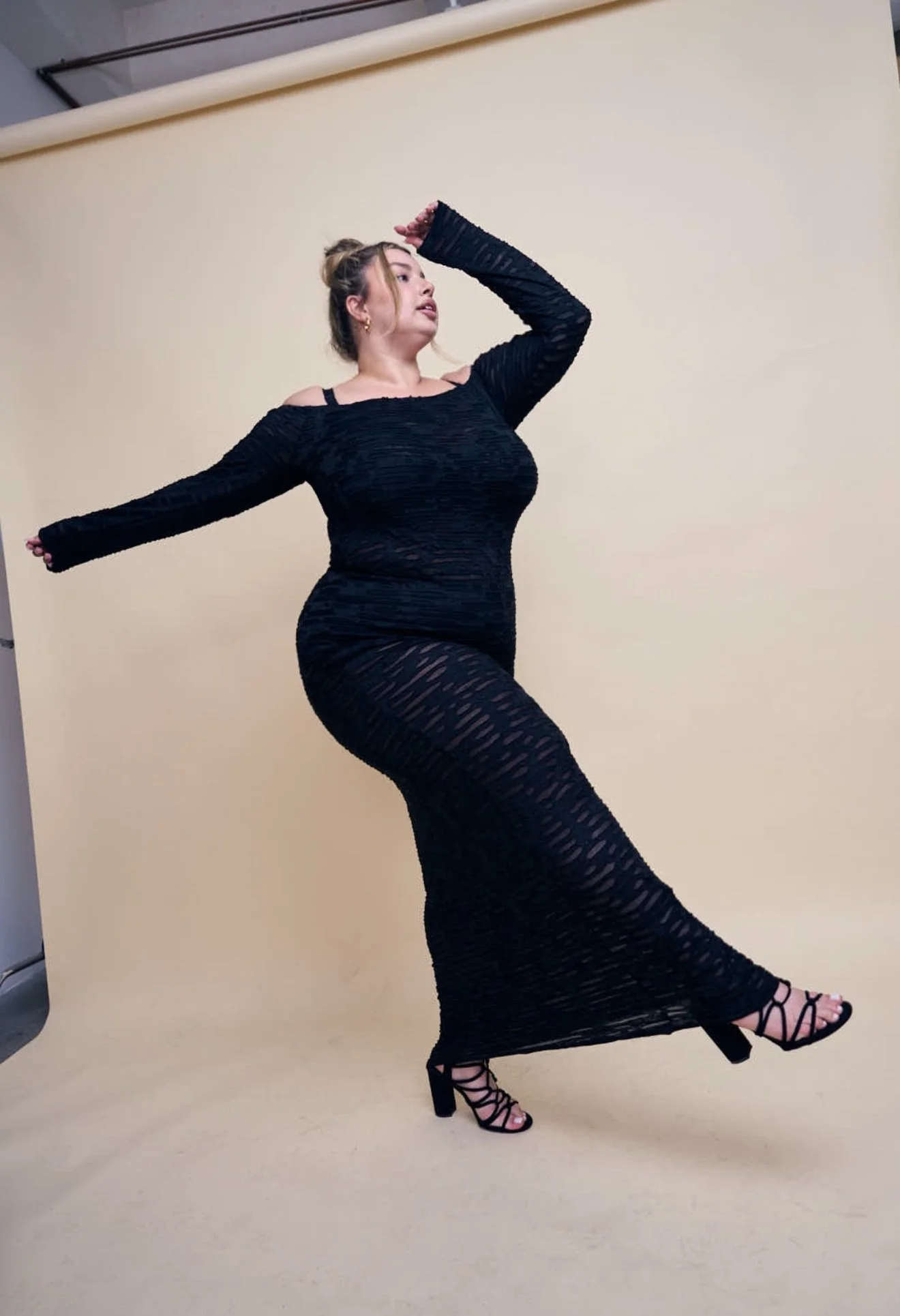
QSM: You were told from a very young age that you were “too big.” How did hearing that as a child affect the way you saw yourself growing up?
Sheeron: Hearing that I was “too big,” “too tall,” and developing so quickly as a child was very confusing. I had no control over it, and I don’t even know if I fully understood what it meant back then. I didn’t realize I had to shop in the adult sections at such a young age until my mom pointed it out.
I remember going to doctors to check why I was developing so quickly, much faster than everyone else. I was already 5’5 at the age of 9 or 10. It was confusing because, on the other hand, I was very loved, doing well at dance school, and I didn’t feel as big as I was constantly told I was.
Every once in a while, that bubble would be popped, especially when I went to the mall with friends and couldn’t find anything that fit. Everything in my country seemed to run small for some reason. I remember one time we were sitting outside the studio waiting for class, and one of the girls said, “I’m not inviting Sheeron to my birthday because she is going to take two seats.” That was the moment I thought, What? How? I’m sitting on one chair right now… Kids can be very mean, haha. Looking back now, those memories hit much harder than they did at the time. But back then, those were simply the beauty standards.
QSM: You’ve talked about growing up in a culture where being thin is the standard. When did you start questioning those beauty ideals?
Sheeron: I think I started questioning these beauty ideals when family members and family friends constantly told me, “You’re so beautiful, but if you lost 10 kilos, you would be gorgeous.” I remember thinking, What is wrong with me?
After a while, I began to understand more and love myself more, so I started answering, “I am beautiful this way too.”
A major boost to my confidence was Ashley Graham. I really listened to her, and she truly made me believe that beauty comes from within. After hearing what she had to say, you could say I found my voice, even though not everyone liked it.
I remember being at war with myself and trying to lose weight through every diet possible. I realized it was not easy for me to lose weight, but that did not make me any less than anyone else. Still, I never wanted to give up on being better, whether that meant working out or even something as simple as welcoming a new student at school.
One summer, I stopped eating normally and survived on an apple a day (very unhealthy), while walking miles every day. I lost a lot of weight, but as soon as I started eating again, even with a very balanced diet, I gained everything back as if I had never lost the weight.
I believe the real goal is to be active and healthy rather than just skinny. I was always dancing and very active, but I was never as skinny as everyone else. I could dance in heels for four or five hours straight several nights a week, I was absolutely in shape, but I still was not “skinny.”
When I came to America at 21, the way people looked at me and found me beautiful made me realize that I was worthy not only in my own eyes, but in others’ eyes too. It made me feel normal and not so different.
QSM: Dance was a huge part of your life. How did it influence your confidence and the way you felt about your body?
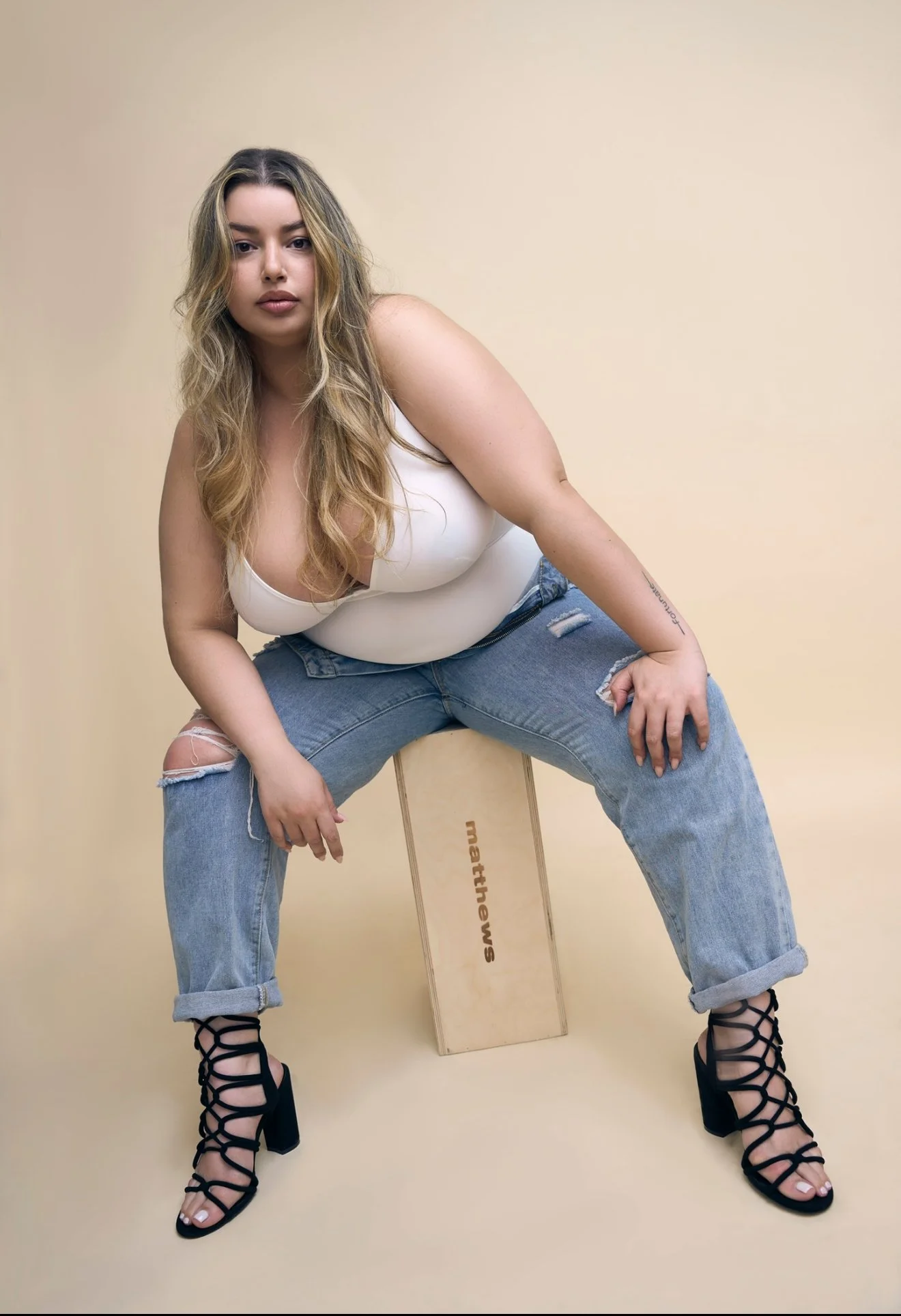
Sheeron: Dance was always a huge part of my life. In some ways, being taller and bigger actually worked in my favor and made me stand out. I was very determined to be the best and took every class I possibly could.
Even when it was hard for my mom to afford it, she knew how much dance meant to me and continued signing me up every single year. My confidence really grew when teachers started calling me to the front and giving me solos. I felt alive. I felt seen.
QSM: Being signed and later dropped by an agency is emotionally tough. What was that experience like for you, and how did you move forward from it?
Sheeron: This experience was not easy because I truly believed in myself and knew I had so much to offer. It made me doubt myself. It felt like taking twenty steps back and suddenly questioning whether I was enough.
I tried applying to other agencies, but no one responded. At some point, I gave up and came to the conclusion that maybe it just was not meant for me at that time. I decided that whatever is meant to happen will happen, so I let it go.
QSM: You stepped back into modeling shortly after giving birth. Did that period change your mindset about your body or your self-worth?
Sheeron: About a month after I gave birth, I saw your post on Instagram saying you (Queen Size Magazine) were looking for a size 18 model. I remember thinking, Should I even bother trying? I was terrified, hahaha. When you all replied to me and accepted me, that was exactly the boost I needed to put myself out there again. I am so thankful for that.
QSM: You’ve faced rejection and discrimination in the industry. How do you protect your confidence in those moments?
Sheeron: Facing rejection and especially discrimination is very hard. Rejection, I understand, is normal and part of life.
I recently heard someone say, “If you knew you were 100 ‘no’s’ away from a ‘yes,’ you would be happy to hear each ‘no,’ knowing a ‘yes’ is on the way.” That really stayed with me because it is so true. But discrimination is completely different. It is unacceptable, unnecessary, and very disappointing. I try to protect my confidence by reminding myself who I am and always striving to be better than I was yesterday.
QSM: For women who struggle with body confidence or feeling judged, what would you want them to hear from you?
Sheeron: For women and men who struggle with their bodies, I would say this:
We are beautiful because of who we are inside and how we treat other people. Even if you are not satisfied with your weight right now, work on your goals while still loving yourself. There is only one of you in this world, and your body is your home.
Life can be difficult, and it is okay to slow down or take a break, but never give up on becoming better than who you were yesterday. We are all beautiful when we lead with grace and love in our hearts.
QSM: I love that advice. Thank you for your time chatting with me. Where can people follow you?
Sheeron: Thank you for this opportunity. People can follow me on Instagram and TikTok: @sheeronalia
Photos by @alquan